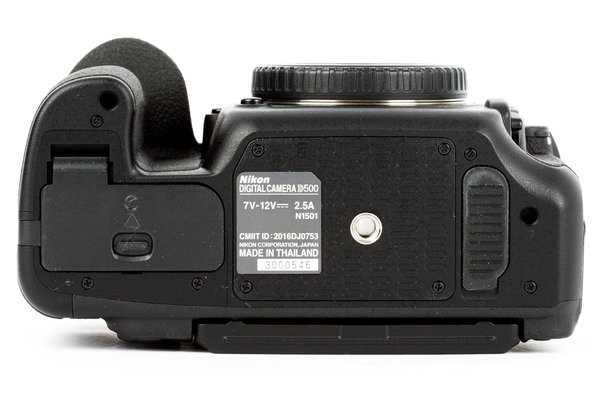
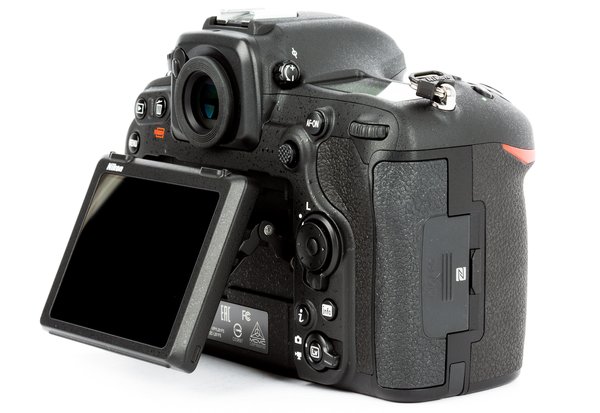
Nikon D500
Rental Rates
- Daily: $12.00
- Weekly: $123.00
- Monthly: $132.00
Recommended Equipment
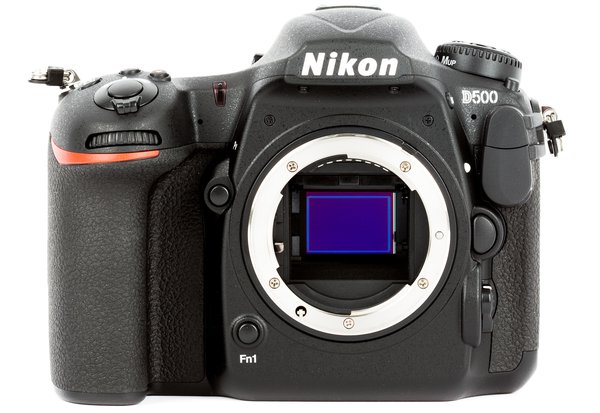
Nikon released the much-anticipated D500 for sports and wildlife shooters on January 6, 2016. Thanks to its excellent image quality, proven ergonomics and a superb autofocus system with a huge buffer, the Nikon D500 is a sports and wildlife photographers' dream come true.
Note: this review has been written and continuously updated by a number of authors: John Lawson (main text), Nasim Mansurov (main text), Spencer Cox (updates and revisions), Jason Polak (secrets to Nikon D500), and Libor Vaicenbacher (wildlife and landscape pages).
If you're encountering the Nikon D500 for the first time, what you need to know is that it's a high-speed, advanced-tier camera mainly intended for sports and wildlife photographers.
The Nikon D500 has a 20-megapixel APS-C sensor with an approximately 1.5x crop factor relative to full-frame. (Nikon calls its APS-C sensors "DX" and its full-frame sensors "FX." See more at Nikon DX vs FX.)
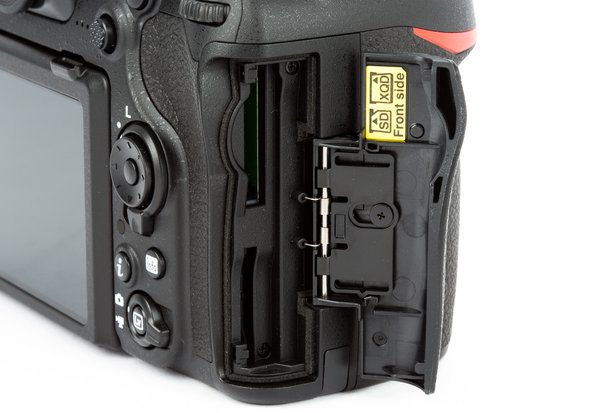
Nikon generally positions its DX cameras as lower-end due to the smaller sensor, but the Nikon D500 is Nikon's most advanced DX DSLR ever. It has the same autofocus system as the flagship-level Nikon D5, 10 frames per second shooting, dual memory card slots, and a large buffer that allows you to take 200 images in a burst before the camera slows down.
How does the Nikon D500 hold up today, given that it was announced in 2016? Even though some of its specifications lag behind the newest mirrorless cameras, the Nikon D500 remains arguably the most advanced APS-C DSLR ever made. It might stay that way forever, since most camera companies have now shifted focus toward mirrorless. See more at DSLR vs Mirrorless Cameras.
Nikon D500 Review: Introduction
Some of us never completely lost faith – Nikon would give us a legitimate successor to the D300S. I think that the many who said to give up and move on to FX because DX is dead, or that the D7200 was the real D300S replacement, perhaps missed the point. The D7200 is an absolutely excellent camera, but it has been pretty obvious that Nikon was holding back on the D7x00 series.
And as far as moving on to FX, well we were already there shooting D4s, D800s, etc., but looking back to DX for the potential advantages that a smaller format, the high-performance body could bring to shooting wildlife and other action. There was room at the top of the DX model lineup for a specialist camera and now we have it – the D400 D500. Nevertheless, I was caught off-guard, along with most people I think, when the D500 was announced alongside the D5 in early 2016. We all knew the D5 was coming, but just how did Nikon manage to keep the D500 a secret?
The D500 takes its place at the top of the Nikon APS-C ("crop sensor") format camera body lineup as a true flagship model and as the undisputed, long-dreamed-of replacement for the D300S. There is no question that the D500 is meant to be viewed as, and perform as, a mini-D5. Consider the naming of the two, the simultaneous announcements, the new auto-focus system common to both, the use of XQD memory cards in both cameras, and even the identical resolution 21MP sensors, among many other commonalities. Quite frankly, on paper, the D500 looks like a dream. And clearly, I'm not the only one thinking that – the camera was sold out for a while after it was released.
Interestingly, Nikon classifies the D500 as "enthusiast" rather than "professional", placing it in the same camp as the D7200. Given the specifications, I think we have to conclude that it is simply the sensor size that prevents Nikon from considering it a "professional" camera. Snobbery over sensor size won't prevent many professional and non-professional photographers from doing amazing work with this camera. Of that, I have no doubt. Some have commented that the US $2,000 price tag is a little steep. Next to the D7200 at $1,200 when announced and now discounted, it does seem so. But then consider that the D300 was announced in 2007 at $1,800, alongside the D3 at $5,000. In that time we have seen an 11% increase in price for the top DX model versus a 30% price hike for the top FX model. So if the ask for the D500 seems high, just put it alongside its big brother, the D5 at $6,500, and the price tag on the mini-D5 starts to look somewhat mini itself.
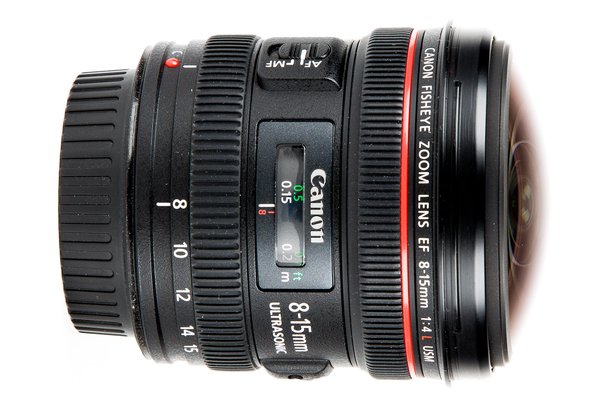
| Angle of View |
180 degrees |
| Aperture |
f4-22 |
| Autofocus |
Autofocus |
| Brand |
Canon |
| Compatibility |
Crop and Full Frame |
| Diameter |
3.1" |
| Dimensions |
Length: 3.7" |
| Filter Style |
Rear Gel |
| Focal Length |
8.0-15.0 |
| Focusing System |
Internal, Full time active, USM motor |
| Groups/Elements |
11/14 |
| Hood Included |
Yes |
| Hood Type |
EW-77 (only usable at 15mm) |
| Image Stabilization |
No |
| Item Type |
Lens |
| Lens Type |
Wide Angle |
| Max Aperture |
4.0 |
| Maximum Magnification |
0.39x |
| Minimum Aperture |
22.0 |
| Minimum Focusing Distance |
0.6feet |
| Mount |
Canon EF |
| Weather Resistant |
Yes |
| Weight |
1.2 lb |
| Zoom Method |
Internal |
Camera Strap
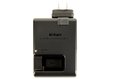
Charger - Nikon MH-25a
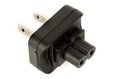
Non-Polarized MH-25 Plug for Nikon
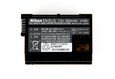
enel15-1

Nikon Body Cap